

A blood oxygen reading of 97% looks reassuring on a smartwatch. But what should you make of a sudden 92% at night, or a value that changes when you tighten the strap? A wearable blood oxygen monitor can offer useful context, provided you understand what it measures and what it cannot tell you.
The key is to treat wrist readings as estimates, not laboratory results. A single number rarely tells the whole story, and a normal-looking display does not override symptoms.
What SpO2 actually tells you
SpO2 stands for peripheral oxygen saturation. It estimates the percentage of haemoglobin in your arterial blood that is carrying oxygen. A reading of 97% means the sensor estimates that about 97% of available haemoglobin binding sites are oxygenated; it does not mean your body contains 97% of the oxygen it needs.
For many healthy adults near sea level, readings from a reliable pulse oximeter commonly fall between 95% and 100%. Results can differ with altitude and certain medical conditions. Your usual range, symptoms and any targets set by your clinician matter more than treating one number as universal.
SpO2 is also different from heart rate. A blood oxygen smartwatch may show both, but an ordinary pulse reading cannot establish whether your oxygen level is adequate. Nor does SpO2 measure carbon dioxide, breathing effort or how effectively oxygen reaches every tissue.
Why a wrist sensor is not the same as a fingertip oximeter
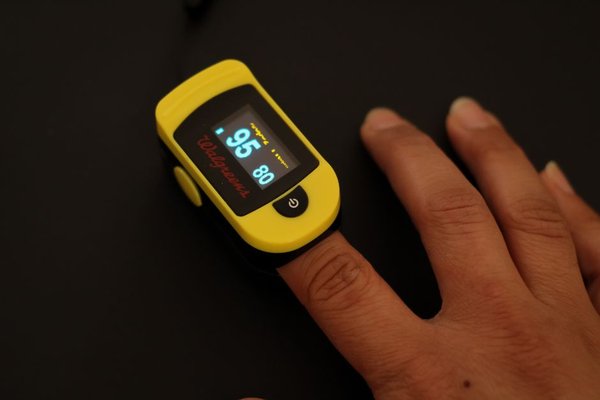
Both devices use light and reflected or transmitted signals to estimate oxygen saturation. A typical fingertip oximeter shines light through a finger; most watches measure light reflected back from tissue at the wrist. That different measurement position creates additional challenges.
Wrist sensors must work around bone, tendons, changing skin contact and everyday movement. Some measure only when you are still, while others record periodic readings during sleep. A feature described as continuous may still include gaps or rejected measurements.
Accuracy varies between products and conditions. A consumer wearable SpO2 monitor should not automatically be assumed equivalent to a medically cleared pulse oximeter. Check the manufacturer’s instructions and the specific intended use of your device, rather than relying on a marketing label.
What can make wrist oxygen tracking misleading?
Before interpreting an unusual result, consider how the reading was captured. Common complications include:
Movement: Walking, shifting in bed or talking with your hands may disrupt the optical signal. Poor fit: A loose strap lets the watch slide; an excessively tight one may affect local circulation. Cold skin: Reduced blood flow near the surface can weaken the signal. Placement: Wearing the watch over a wrist bone or tattoo may interfere with some sensors.
Skin pigmentation also deserves attention. The US Food and Drug Administration has highlighted differences in pulse-oximeter accuracy across skin tones, particularly the risk of overestimating oxygen levels in some people with darker skin. Device performance depends on its design and testing, so a reassuring value should never be treated as proof that nothing is wrong.
How to get a more useful reading
Start with your watch’s own positioning instructions. Sit down, rest your arm on a surface and stay still while the measurement runs. Make sure the sensor is clean, the strap is comfortably snug and your skin is warm. Repeat an odd result after a short rest rather than repeatedly measuring while moving around.
Here is a practical example: Your usual daytime readings hover around 97%, but the watch briefly shows 93% just after a brisk walk. You sit quietly, adjust the strap and measure again. If the watch returns to your usual range and you feel well, movement or fit may explain the first reading. It is not proof, though; repeated low values merit proper assessment.
For medical concerns, ask a healthcare professional whether you should use a medical-purpose fingertip oximeter and how to take readings correctly. Even fingertip devices have limitations, and comparing two gadgets does not establish the true oxygen level with certainty.
When trends help, and when they can fool you
Several comparable readings can be more informative than one outlier. Look for patterns taken in similar conditions, such as resting measurements at the same time of day. Keep a note of symptoms, illness, altitude and whether you recently exercised. Those details give a clinician something meaningful to interpret.
Nightly averages need extra caution. A low overnight value may reflect poor sensor contact or a real breathing problem. A watch cannot diagnose sleep apnoea, and a normal overnight chart cannot rule it out. Snoring, witnessed breathing pauses, gasping or marked daytime sleepiness warrant a medical discussion regardless of the graph.
The same principle applies to broader health tracking: understanding resting heart rate and how fitness trackers measure sleep can add context, but neither replaces a clinical evaluation.
When a low reading needs medical attention
Do not dismiss a concerning reading simply because it came from a wrist sensor. If you have severe shortness of breath, chest pain, blue or grey lips, confusion, or you are struggling to stay awake, seek emergency medical care immediately. Do not spend time troubleshooting your watch first.
For a reliable home pulse-oximeter reading, MedlinePlus advises contacting a healthcare provider at 92% or lower and seeking immediate medical attention at 88% or lower. These are general guidelines, not personalised watch-alert thresholds. Some people with chronic lung disease or at high altitude have different clinical targets.
If repeated watch measurements are unexpectedly low, especially when you are unwell, contact a healthcare professional promptly for advice on confirmation and next steps. A normal wearable reading does not rule out a problem when symptoms suggest otherwise.
Frequently asked questions
Is 94% SpO2 normal on a smartwatch?
A 94% wrist reading is not enough on its own to determine your oxygen status. Rest, follow the device instructions and repeat it. If it persists, is unusual for you or comes with symptoms, seek medical advice rather than assuming the watch is accurate or inaccurate.
Can I use a wearable blood oxygen monitor instead of a medical oximeter?
Not unless the specific device is authorised and intended for your medical use and your clinician agrees. Many watches offer general wellness estimates. A medical-purpose pulse oximeter is assessed differently, and healthcare decisions should reflect symptoms and clinical guidance.
Why is my SpO2 lower during sleep?
Readings can fluctuate overnight, while changes in wrist contact may also create misleading dips. Repeated low values, snoring, gasping or daytime sleepiness deserve medical assessment. A consumer watch alone cannot confirm or exclude a sleep-related breathing disorder.
Should I keep the SpO2 feature switched on all day?
That depends on your goal and the device’s battery impact. For general curiosity, occasional resting measurements may provide enough context. If you have a medical condition requiring oxygen monitoring, follow a clinician’s specific plan rather than relying on automatic wrist notifications.
Use the number as a clue, not a verdict
A pulse oximeter wearable can help you notice patterns and ask better questions about your health. Its greatest weakness is the temptation to treat a precise-looking percentage as a definitive answer. Check the conditions behind the measurement, consider how you feel and recognise when proper medical assessment matters more than the screen.