

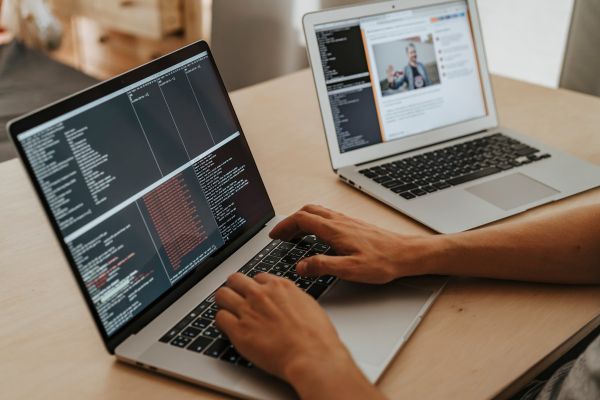
Learning to code often begins with a simple question: which programming language should I study first? The answer seems as though it should be straightforward, but a quick search can make the decision feel surprisingly complicated. One person recommends Python, another insists JavaScript is essential, while someone else says beginners should start with C to understand how computers actually work.
The truth is that there is no single perfect route. People learn programming languages for different reasons, and the best starting point usually depends on what they hope to create. Someone interested in websites will follow a different path from a person who wants to build mobile apps, automate office tasks, analyze data, or develop video games.
More importantly, learning programming is not about memorizing every command in a language. It is about understanding how to break problems into smaller parts, express solutions clearly, and keep experimenting when the first attempt fails.
Start With a Clear Reason for Learning
Before choosing a language, think about what attracted you to programming in the first place. Perhaps you want to build your own website, change careers, create a useful app, or understand the technology you use every day. That reason matters because it gives direction to your learning.
Without a clear goal, it is easy to jump between tutorials. You may spend a week learning Python, move to JavaScript after watching a web development video, and then switch to Java because someone described it as more professional. This kind of movement feels productive, but it often prevents deeper progress.
A better approach is to choose one realistic project or area of interest. You do not need a detailed five-year career plan. A simple goal such as creating a personal website, building a basic calculator, or automating repetitive file tasks is enough to guide your first steps.
When the language connects to something you genuinely want to make, lessons become easier to remember. Syntax stops looking like a collection of strange symbols and starts becoming a practical tool.
Choose a Language That Matches Your Goal
Different programming languages are designed around different types of work. Python is widely used for automation, data analysis, artificial intelligence, scripting, and general application development. Its readable structure makes it a comfortable starting point for many beginners.
JavaScript is central to modern web development. It allows developers to make websites interactive, respond to user actions, update content without refreshing a page, and build full web applications. Anyone interested in front-end development will eventually need to understand it.
Java and Kotlin are commonly associated with Android development and large business applications. Swift is the main language used for building software across Apple platforms. C# is popular for business software, web applications, and game development with Unity. C and C++ are often chosen for systems programming, embedded technology, high-performance applications, and game engines.
None of these languages is universally better than the others. They are tools created for different environments. Instead of asking which language is the most powerful, ask which one will help you build the kind of project you currently care about.
Learn the Core Ideas Behind the Syntax
New learners sometimes focus so heavily on punctuation and spelling that they miss the larger ideas. Every programming language has its own syntax, but many fundamental concepts appear again and again.
Variables store information. Conditions help a program make decisions. Loops repeat actions. Functions organize reusable instructions. Data structures hold related values. Errors reveal where the program’s behavior differs from what you expected.
Once these ideas become familiar, moving to another language becomes far less intimidating. The symbols may change, but the underlying thinking remains similar.
For example, a loop written in Python may look different from one written in JavaScript, but both are designed to repeat a block of instructions. A function in Java might require more formal structure than a function in Python, yet both solve the same organizational problem.
This is why experienced developers can often learn a new language faster than beginners. They are not relearning programming from the beginning. They are adapting concepts they already understand to a new set of rules.
Use Tutorials Without Becoming Trapped in Them
Tutorials are useful because they provide structure. They introduce unfamiliar ideas in a manageable order and demonstrate how code fits together. The problem begins when learners only follow instructions without making independent decisions.
It is possible to complete several courses and still feel unable to build anything alone. This usually happens because copying a finished solution creates recognition, not mastery. The code looks familiar, but the learner has not practiced deciding what to write next.
After completing a tutorial section, close it and rebuild the example from memory. The result does not need to be perfect. In fact, struggling to remember a step is useful because it reveals what you have not fully understood.
You can also change the project. If the tutorial creates a to-do list, add categories, deadlines, or a search feature. If it builds a guessing game, introduce difficulty levels or a scoring system. Small modifications force you to think beyond the instructor’s exact steps.
Tutorials should function like training wheels. They provide balance at the beginning, but they are not meant to remain attached forever.
Build Small Projects Before Attempting Big Ideas
Ambitious projects can be exciting, but they can also overwhelm beginners. Building a complete social network, advanced mobile app, or commercial game requires many skills beyond basic programming. When progress becomes slow, it is easy to assume that you are simply not talented enough.
Smaller projects create a healthier learning cycle. You can finish them, test them, notice mistakes, and improve them within a reasonable amount of time.
A beginner learning Python might create a temperature converter, expense tracker, file organizer, or simple quiz. Someone learning JavaScript could build an interactive form, countdown timer, image gallery, or note-taking page. An aspiring game developer might start with a basic movement system before trying to design an entire adventure game.
Finishing small programs teaches something tutorials cannot: how to move from an unclear idea to a working result. You learn to define the problem, choose an approach, test your assumptions, and repair unexpected behavior.
Those modest projects may not look impressive at first, but they form the foundation of much larger work.
Treat Errors as Part of the Conversation
Programming errors can feel personal, especially in the beginning. You write several lines of code, press run, and receive a message filled with unfamiliar terms. It is tempting to see that message as proof that you are doing badly.
In reality, errors are one of the main ways a computer communicates with a programmer. They point toward missing punctuation, incorrect values, unavailable files, failed conditions, or assumptions that did not match the program’s actual state.
Learning to read error messages is as important as learning to write code. Start with the first error rather than trying to solve everything at once. Check the file name, line number, and error category. Then compare the message with the code directly around that location.
Sometimes the reported line is only where the problem became visible, not where it began. A missing bracket earlier in the file may cause an error several lines later. This kind of detective work feels frustrating at first, but it gradually becomes one of the most valuable programming skills.
Good programmers are not people who never make mistakes. They are people who have learned how to investigate them calmly.
Practice Consistently Without Burning Out
Consistency matters more than occasional bursts of intense study. Spending six hours coding on one Sunday and then avoiding it for two weeks usually produces less progress than practicing for thirty or forty minutes several times a week.
Regular practice keeps the language familiar. You spend less time remembering where you stopped and more time developing the next skill. It also makes difficult topics feel less dramatic because they become part of an ongoing routine rather than a major event.
That said, learning should not become punishment. Staring at the same bug late into the night is not always productive. Sometimes the best solution is to take a break, return with fresh attention, and notice the obvious mistake that was invisible an hour earlier.
Progress in programming is rarely smooth. Some days a concept clicks immediately. On others, a tiny issue takes far too long to solve. Both experiences are normal.
Read Other People’s Code Carefully
Writing code is essential, but reading code can also accelerate learning. It exposes you to different ways of naming variables, organizing functions, handling errors, and structuring projects.
Begin with small examples that are close to your current skill level. Large professional codebases may contain frameworks, tools, and design patterns that make little sense without context. A short program written clearly is often more educational than thousands of advanced lines.
When reading code, do not simply scan it. Pause after each section and predict what will happen. Change a value and observe the result. Remove a line to see what breaks. Rewrite a function in your own style.
This turns reading into active study. Over time, you begin to recognize common patterns and understand why certain solutions are easier to maintain than others.
Learn How to Search for Answers
No programmer remembers everything. Even experienced developers regularly look up syntax, documentation, library behavior, and error messages. The ability to search effectively is not a sign of weakness. It is part of the work.
The key is to search for the specific problem rather than asking an extremely broad question. Include the language name, the error message, and the action you were attempting. Compare multiple explanations instead of copying the first solution you see.
Official documentation becomes increasingly valuable as your skills grow. It may appear dry at first, but it usually provides the most accurate description of how a language or tool behaves.
When you find a solution, try to understand why it works before adding it to your project. Blindly copying code can solve the immediate issue while creating a larger problem later.
Move to Another Language at the Right Time
Many learners wonder how long they should stay with their first language. There is no fixed timeline, but switching too early can create confusion. It is usually helpful to remain with one language until you can build small projects, use functions comfortably, work with common data structures, and debug ordinary mistakes.
At that point, a second language can deepen your understanding. You begin noticing which ideas are universal and which belong to a particular ecosystem.
The goal is not to collect languages like certificates. Knowing five languages at a shallow level is often less useful than knowing one language well enough to build reliable projects. New languages should be chosen because they help you solve a new kind of problem, not because you feel behind whenever another developer mentions them.
Learning Programming Is Really Learning How to Think
People often begin by searching for the easiest way to learn programming languages. They expect the main challenge to be syntax, technical vocabulary, or remembering commands. Those things matter, but they are only the visible surface.
The deeper skill is learning how to think through uncertainty. Programming teaches you to divide large problems into smaller ones, test ideas, notice patterns, and revise solutions without treating failure as the end.
Choose a language that fits your goal, practice the core concepts, build projects that are small enough to finish, and allow yourself to make plenty of mistakes. Gradually, the code will stop feeling like a foreign script. It will become a way of expressing ideas, one careful instruction at a time.